

Einkorn Hawaiian Rolls (Soft, Fluffy + Freezer-Friendly)

January 20, 2025
super easy
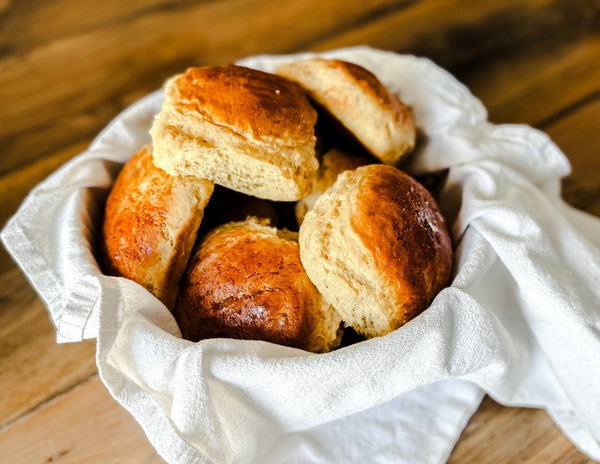
These einkorn Hawaiian rolls are soft, pillowy, and slightly sweet — made with pineapple juice, honey, whole milk, and einkorn flour instead of the preservatives and additives hiding in the store-bought version.
My husband can eat three before I sit down. I’ve stopped fighting it and just started making a double batch.
Why This Recipe Works
Hawaiian Rolls are my weakness and it is the one thing that is almost impossible to find clean. Sloppy joes on a weeknight are that much more delicious. A grilled chicken sandwich is that much healthier and tastier. The sweet, buttery, pillowy softness of a Hawaiian roll is hard to replicate and yet, have you looked at the ingredient list on the store-bought version lately? Enriched flour, high fructose corn syrup, soybean oil, artificial flavors, calcium propionate. It goes on.
This recipe gets tastes like store bought— same soft texture, same subtle sweetness, same pull-apart satisfaction, but with a short, recognizable ingredient list and einkorn flour instead of refined modern wheat.
The pineapple juice is what gives Hawaiian rolls their signature sweetness and slightly fruity warmth. It also acts as a mild acid that interacts with the yeast during the long first rise, contributing to the tender, open crumb structure that makes these rolls so soft. The honey adds another layer of sweetness and helps the rolls develop a gorgeous golden color in the oven.
Einkorn flour makes this dough more forgiving than you’d expect from a yeasted bread recipe. Einkorn’s weaker gluten structure means less risk of overworking the dough, and its natural nuttiness and slight sweetness complement the pineapple and honey without competing. These rolls are genuinely one of the easiest yeasted bread projects on this site — and if you’ve been nervous about bread baking, this is the right recipe to start with.
They also freeze perfectly, which is the other reason this is a staple in our house. Make a batch on the weekend, freeze them, and you have rolls ready whenever you need them. Pull them out the night before, warm them in the oven for a few minutes, and nobody knows they weren’t baked this morning.
What Is Einkorn Flour?
Einkorn is one of the oldest cultivated grains in the world — an ancient wheat that has never been hybridized the way modern wheat has been. Its gluten structure is fundamentally different from modern wheat, with smaller, more fragile gluten molecules that many people find much easier to digest, even those who struggle with modern wheat products. It is not gluten-free and is not safe for celiac disease — but for families who are simply looking for a cleaner, less processed grain, einkorn is the upgrade.
In bread baking, einkorn behaves differently than conventional flour in one important way: do not over-knead it. Einkorn’s gluten is delicate, aggressive kneading can overdevelop it and produce a dense, heavy roll. A gentle knead just until the dough comes together is all it needs. The long rise does everything for you.
We use Jovial Foods all-purpose einkorn flour. It’s available online what this recipe was developed with.
Key Ingredient Notes
Whole milk. One cup, warmed to 105–110°F. The fat in whole milk contributes to the richness and softness of the finished roll. Lower-fat milk produces a slightly less tender result. The temperature matters — too hot and it kills the yeast, too cold and the yeast won’t activate.
Pineapple juice. 10 fl oz, warmed to the same temperature as the milk. This is the ingredient that makes these Hawaiian rolls taste like Hawaiian rolls. It provides the distinctive sweetness and subtle fruitiness that the store-bought version tries to replicate with artificial flavor. Use 100% pineapple juice — not a blend or a sweetened cocktail.
Butter. 2 tablespoons. Added to the warm milk and juice mixture before heating. The butter enriches the dough and contributes to the soft, tender crumb. Grass-fed butter adds a slightly richer flavor if you have it.
Honey. ⅓ cup. The primary sweetener — it adds sweetness, helps the rolls develop golden color in the oven, and contributes to the soft texture by retaining moisture. Maple syrup is a direct swap with a slightly deeper, less floral sweetness.
Pink Himalayan salt. 2 teaspoons. Salt slows yeast activity slightly — this is intentional and actually gives the dough more structure and flavor development during the long first rise. Don’t reduce it.
Dry yeast. 2½ teaspoons — the equivalent of one standard packet. The yeast goes into the warmed liquid mixture and must bubble and foam within 5 minutes. If it doesn’t bubble, the yeast is inactive and the dough will not rise. Start over with fresh yeast.
All-purpose einkorn flour. 6½ cups — a generous amount for 12 rolls. The dough will be stickier than a conventional flour dough and that’s correct for einkorn. Add extra flour one tablespoon at a time only if the dough is completely unworkable, and knead gently — don’t overdo it.
Egg. One, whisked and brushed over the rolls before baking. The egg wash gives the rolls their glossy, golden exterior. Don’t skip it — it’s a significant part of what makes these look like proper Hawaiian rolls.
Variations and Substitutions
Maple syrup instead of honey. Same amount, slightly deeper flavor. Works well if you prefer to avoid honey or just want a variation.
Brush with melted butter after baking. Instead of (or in addition to) the egg wash, brush the hot rolls with melted butter the moment they come out of the oven. This gives them an even softer, richer finish.
Sesame seeds on top. Sprinkle sesame seeds over the egg wash before baking for a slider-style bun look that’s great for parties.
Regular all-purpose flour. Start with 5½ cups and add more one tablespoon at a time if needed. The rolls will be slightly different in flavor and texture but the recipe works.
Smaller rolls for sliders. Divide the dough into 18–20 pieces instead of 12 for smaller slider-size buns. Reduce the bake time to 15–18 minutes and check for golden color.
How to Make Einkorn Hawaiian Rolls
- Warm the liquid ingredients. In a Dutch oven or large heavy-bottomed pan over low heat, combine the 1 cup whole milk, 10 fl oz pineapple juice, 2 tbsp butter, ⅓ cup honey, and 2 tsp pink Himalayan salt. Heat gently, stirring occasionally, until the mixture reaches 105–110°F. Use a thermometer — this temperature range is the sweet spot for yeast activation. Too hot kills the yeast; too cold and it won’t activate.
- Proof the yeast. Remove from the heat and stir in the 2½ tsp dry yeast. Let the mixture rest for 5 minutes without stirring. After 5 minutes it should be visibly foamy and bubbling. If nothing happens after 10 minutes, the yeast is dead — start over with fresh yeast. Don’t move forward if the yeast hasn’t proofed.
- Add the flour. Add the 6½ cups all-purpose einkorn flour to the yeast mixture. Stir until the flour is fully incorporated and the dough comes together. The dough will be sticky — stickier than a conventional flour dough. This is normal for einkorn. Don’t add extra flour unless the dough is so wet it won’t hold any shape at all.
- First rise — 2 hours. Place the lid on the Dutch oven and set it somewhere warm — near a window, on top of the stove if it’s on, or inside an oven with just the light on. Let the dough rise for 2 hours until it has doubled in size.
- Shape the rolls. Once the dough has doubled, turn it out onto a lightly floured surface. Knead gently just until the dough comes together smoothly — this takes about 30 seconds to 1 minute. Do not over-knead einkorn dough. Divide into 12 equal pieces using a bench scraper or pizza cutter and roll each piece into a smooth ball between your palms.
- Prepare the pan. Line a baking sheet with parchment paper and grease with the 2 tbsp olive oil.
- Second rise — 1 hour. Place the dough balls on the prepared pan, spacing them so they’re touching or just slightly apart for pull-apart rolls. Cover loosely with a clean dish towel and let rise for 1 hour until puffed and touching.
- Egg wash. Preheat the oven to 350°F. Whisk the egg in a small bowl and brush it gently over the tops of all the rolls.
- Bake for 20–25 minutes until the tops are deep golden brown and the rolls sound hollow when you tap the bottom. Start checking at 20 minutes — oven temperatures vary.
- Cool before serving. Let the rolls rest in the pan for at least 5 minutes before pulling apart and serving.
Make-Ahead Options
Make the dough in the morning, bake in the afternoon. Complete the first rise in the morning, shape the rolls, and cover the pan tightly with plastic wrap in the refrigerator. The second rise happens slowly in the fridge over several hours. Pull them out about an hour before you want to bake to come to room temperature, then egg wash and bake as directed.
Shape and freeze unbaked rolls. After the first rise, shape the dough into balls and place on a parchment-lined baking sheet. Freeze until solid, then transfer to a freezer bag. The night before you want to serve them, place the frozen dough balls on a greased pan and let them thaw and complete their second rise in the refrigerator overnight. The next morning, let them come to room temperature for 30–60 minutes, egg wash, and bake.
Bake ahead and freeze. Bake the rolls completely, cool, and freeze. Thaw at room temperature and warm in the oven at 300°F for 5–7 minutes. They come out tasting freshly baked.
How to Store and Freeze
Room temperature: Store in an airtight container for up to 3 days. Because these are preservative-free they won’t last as long as store-bought rolls.
Freezer: Once completely cooled, flash freeze on a parchment-lined baking sheet for 1 hour until firm. Transfer to a freezer-safe bag and freeze for up to 2 months. To reheat, thaw at room temperature and warm in the oven at 300°F for 5–7 minutes.
Troubleshooting
Yeast didn’t bubble. The yeast is inactive — either it’s expired or the liquid was too hot. Check the expiration date on your yeast. If the liquid temperature was above 115°F it killed the yeast. Start over with fresh yeast and liquid at exactly 105–110°F.
Dough is too sticky to work with. Add flour one tablespoon at a time until the dough is manageable but still soft and slightly tacky. Einkorn dough is naturally stickier than conventional dough — a little stickiness is correct. Lightly flour your hands when shaping.
Rolls came out dense. Most likely the yeast didn’t fully activate, the dough was over-kneaded, or the rise environment wasn’t warm enough. Make sure the yeast mixture is visibly foamy before adding flour, knead briefly and gently, and give the dough a genuinely warm place to rise.
Rolls didn’t brown enough. The egg wash might have been applied too thin or the oven temperature was slightly low. Make sure you brush a full, even coat of egg wash over each roll. If they’re baked through but pale, brush with melted butter right when they come out — it helps.
Expert Tips
Temperature is everything for the yeast. Use a thermometer. 105–110°F is the target — this is the range where yeast activates properly. Below 100°F and it won’t activate. Above 115°F and it dies. An instant-read thermometer removes all the guesswork.
Don’t over-knead einkorn. This is the most important einkorn-specific tip. Einkorn’s gluten is fragile — ten seconds of gentle kneading is enough. The long first rise does the structural work. Over-kneaded einkorn produces dense, heavy rolls.
The dough is supposed to be sticky. New einkorn bakers often add too much flour because the dough feels wetter and stickier than they expect. Resist that urge. Add extra flour only if the dough truly won’t hold shape at all, and add it one tablespoon at a time.
Give the rises a warm environment. Einkorn doesn’t rise as dramatically as modern wheat dough, so a warm proofing spot is important. An oven with just the light on (no heat) maintains around 75–80°F — perfect for both rises.
Generous egg wash. The glossy, golden exterior that makes these look like proper Hawaiian rolls comes entirely from a generous, even egg wash. Don’t thin it with water — use the whisked egg straight.
Touch-adjacent rolls for pull-apart texture. Place the dough balls so they’re just touching on the pan before the second rise. As they puff they grow into each other and create that soft, pull-apart texture that makes Hawaiian rolls so satisfying to eat.
Frequently Asked Questions
Can I use regular all-purpose flour instead of einkorn? Yes — start with 5½ cups and add more one tablespoon at a time if needed. The rolls will work well but won’t have the einkorn nuttiness or the digestive benefits. The dough will be less sticky and can handle more kneading than einkorn.
Why is my einkorn dough so sticky? This is normal. Einkorn absorbs liquid more slowly than conventional flour and its dough is naturally stickier. Don’t add large amounts of extra flour — add it one tablespoon at a time only if the dough truly won’t come together. Lightly flour your hands and work surface when shaping.
Can I make these without a Dutch oven? Yes — the Dutch oven is used on the stovetop to warm the liquid mixture and then as a proofing vessel with the lid on. You can use any large heavy pot with a lid, or warm the liquid in a regular saucepan and transfer to a large covered bowl for the first rise.
Can I use instant yeast instead of active dry? Yes — use ¾ of the amount listed (about 1¾ teaspoons) since instant yeast is more potent. You can add instant yeast directly to the flour without proofing it first, though proofing is always a good way to confirm your yeast is active.
Why pineapple juice specifically? Pineapple juice is what gives Hawaiian rolls their signature sweetness and subtle tropical quality. Apple juice is the most common substitute if you don’t have pineapple juice — it gives a similar sweetness without the tropical note.
How do I know when the rolls are done? The tops should be deep golden brown from the egg wash. If you tap the bottom of a roll it should sound hollow. An instant-read thermometer in the center of a roll should read 190–200°F for fully baked bread.
Other Recipes You Will Love
https://healthierhomemade.co/recipe/onion-buns/

Hawaiian Buns
Ingredients
First Dough Step- Warm in a Dutch oven or large pan
- 1 cup Whole milk
- 10 fl oz Pineapple juice
- 2 tbsp Butter
- 1/3 cup Honey
- 2 tsp Pink himalayan salt
Second step for dough
- 2 1/2 tsp Dry yeast
- 6 1/2 cup Einkorn flour
Topping
- 1 Egg
- 2 tbsp Olive oil (to grease the pan)

Instructions
- In a dutch oven over low heat combine 1 cup Whole milk,10 fl oz Pineapple juice, 2 tbsp Butter, 1/3 cup Honey and 2 tsp Pink himalayan salt. Heat until warmed to 105-110℉.
- Mix in the 2 1/2 tsp Dry yeast. Let rest 5 minutes until it bubbles
- Add in the 6 1/2 cup Einkorn flour.
- Stir until well mixed. Place the lid on and let proof about 2 hours.
- At the 2 hour point, once it has double in size turn out onto a floured surface. Knew the dough and roll into 12 balls.
- Line a baking sheet with parchment paper and grease with 2 tbsp Olive oil.
- Place the balls of dough onto the parchment paper and lay a dish cloth over top.
- Let rise another hour. Remove the dish towel.
- Whisk an egg in a small bowl.
- Brush the dough with the egg mixture. Bake for 20-25 minutes in the oven at 350℉.
Notes
Nutrition
Reviews
Try this also


3 Comments
-
-
healthierhomemade.co
Hi Danielle,
Are you looking for the Hawaiian rolls? I was able to view it. However, I want to make sure there isn’t some type of glitch on the system.Anna
-
healthierhomemade.co
I figured it out, we switched the system on here so you can double and the ingredients were in a different spot not showing published. It should be there now. Sorry about that!
-
I loved this recipe when I made it for Thanksgiving, but now the whole recipe is missing. I want to give it 5 stars but I don’t have the recipe to follow anymore.