

Einkorn Dinner Rolls (Soft, Fluffy + Freezer-Friendly)

November 20, 2023
super easy
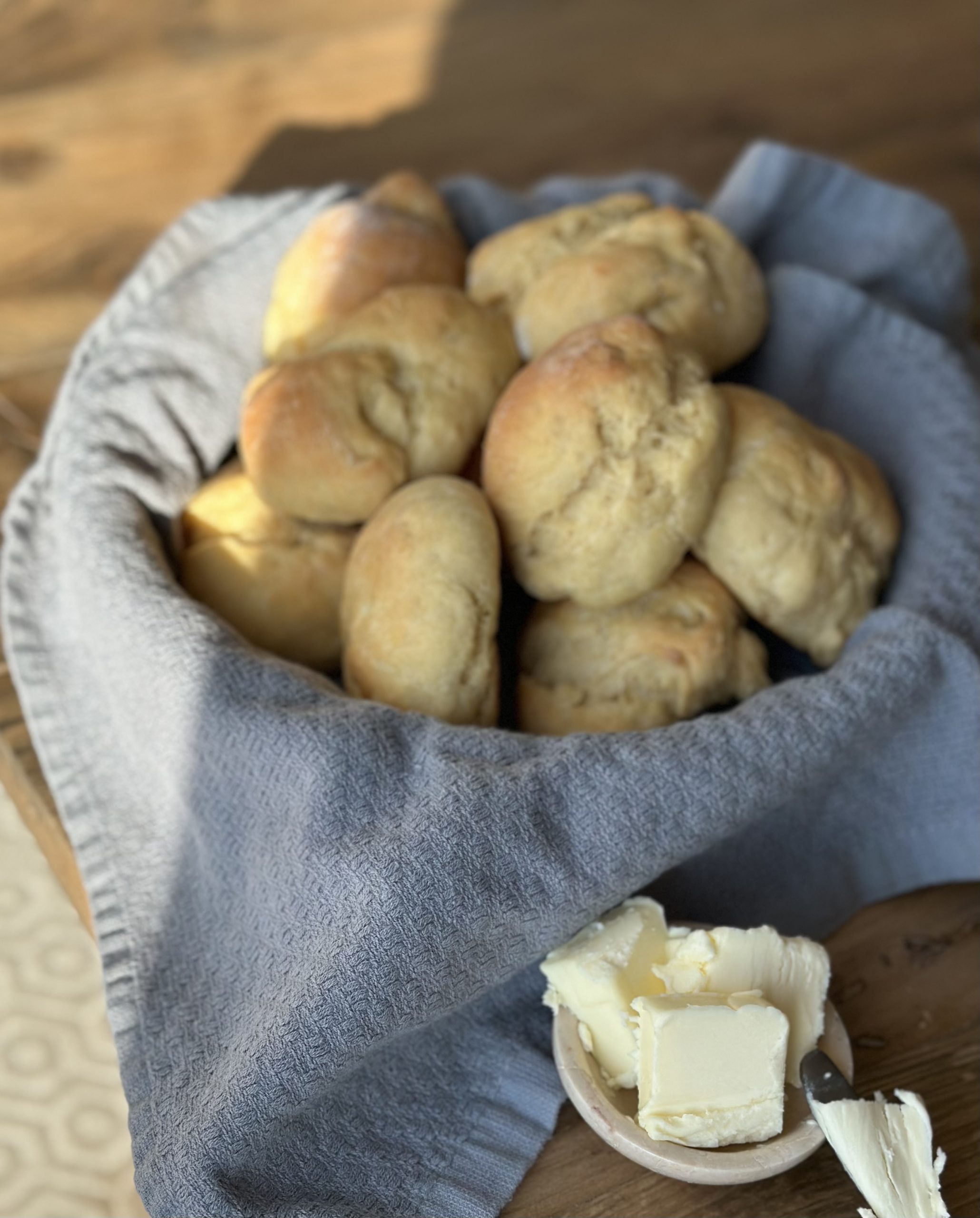
These einkorn flour bread rolls are soft, golden, and have that subtle nutty flavor that makes everything taste more special — and because einkorn doesn’t need kneading, the hands-on time is minimal while the dough does its own thing for two hours.
Perfect alongside soup, salads, pasta, or your holiday table. Once you make these you won’t go back to store-bought.
Why This Recipe Works
I love yeasted rolls — especially in the fall and around the holidays — but I could never find a clean version at the grocery store without a long ingredient list full of preservatives and additives. That’s what pushed me to start making these einkorn flour bread rolls at home, and they’ve become a staple in our house ever since.
What makes this recipe different from a standard dinner roll recipe is the flour. Einkorn is an ancient grain that bakes differently than modern all-purpose flour — it creates a slightly denser, more tender roll with a subtle nutty flavor that you just can’t get from regular flour. People taste these and immediately notice something is different, even if they can’t name it.
The other thing I love about this recipe is the hands-on time. Once the dough comes together, you cover it and walk away for two hours. I use that time to do other meal prep, catch up on laundry, help with homework — the dough is completely self-sufficient. The second rise takes another 30–45 minutes while the oven preheats. The actual work involved is maybe 20 minutes total.
One important note specific to einkorn: do not knead this dough. Einkorn has a naturally weaker gluten structure than modern wheat, which is what makes it easier to digest — but it also means overworking it makes the rolls dense and heavy. Mix just until the flour is combined and then leave italone. The two-hour rest does all the gluten development work for you.
These rolls freeze beautifully, which means I almost always make a full batch and freeze half. Pull them from the freezer, reheat at 300°F for 8–10 minutes, and they taste completely fresh.
What Is Einkorn Flour?
If you’re new to einkorn, here’s what matters. Einkorn is one of the world’s oldest cultivated grains — an ancient wheat that has never been hybridized or modified the way modern wheat has been. It’s the same grain that has been grown for thousands of years, unchanged.
For baking, this matters because einkorn has a different gluten structure than modern wheat. The gluten molecules are smaller and more fragile, which means many people who have difficulty with modern wheat find einkorn much easier to digest. It is not gluten-free — it does contain gluten — but the type of gluten is structurally different and generally gentler on the digestive system.
Flavor-wise, einkorn has a natural nuttiness and a slightly sweet, rich quality that you don’t get from modern flour. In bread rolls it adds something that makes people keep reaching for another one.
For this recipe, use all-purpose einkorn flour — not whole wheat einkorn, which is heavier and will produce a denser roll. Jovial Foods is the most widely available brand and what I use. You can find it at Whole Foods, many health food stores, or online.
Key Ingredient Notes
All-purpose einkorn flour. Four cups is what this recipe calls for, but einkorn absorbs moisture more slowly than modern flour and the dough will feel stickier than you expect. That’s normal — don’t add more flour just because the dough feels wet. See the expert tips section below for how to handle sticky einkorn dough.
Active dry yeast. 2¼ teaspoons — the equivalent of one standard packet. Active dry yeast needs to be proofed in warm liquid before using, which is why the milk temperature matters so much here. Check the expiration date on your yeast before starting — dead yeast is the number one reason bread doesn’t rise.
Warm milk. Heat to around 110°F — warm enough to activate the yeast but not so hot it kills it. If you don’t have a thermometer, the milk should feel warm to the touch but not hot. Too hot and the yeast is dead before you start. Too cold and it won’t activate. A simple instant-read thermometer removes all the guesswork.
Honey. Two tablespoons does two jobs — it feeds the yeast during proofing and adds a subtle sweetness to the finished rolls that makes them taste just slightly special without being sweet like a dessert roll. Don’t skip it, and don’t substitute sugar if you can avoid it — honey adds moisture that sugar doesn’t.
Extra virgin olive oil. Two tablespoons added after the yeast has proofed. This adds a subtle richness and keeps the rolls tender. You can swap for melted butter if you prefer a more classic buttery roll — both work equally well. See the variations section.
Salt. One teaspoon, whisked with the flour before combining. Salt slows yeast activity slightly, which is why it goes in with the dry ingredients rather than directly with the yeast mixture.
Variations and Substitutions
Butter instead of olive oil. Swap the 2 tablespoons of extra virgin olive oil for 2 tablespoons of melted unsalted butter. The rolls will be slightly richer and more classic-tasting.
Dairy-free. Swap the whole milk for oat milk or unsweetened almond milk, warmed to the same 110°F temperature. The rolls will be slightly less rich but the recipe works well with either substitute.
Herb and garlic rolls. Add 1 tablespoon of freshly chopped sage, rosemary, or thyme to the dough along with 1 teaspoon of garlic powder and 4 cloves of pressed garlic. These are incredible alongside soup or a roast.
Honey butter finish. Brush the tops with melted butter the moment they come out of the oven. The butter soaks in while the rolls are hot and gives them a glossy, rich finish that’s hard to resist.
Sweet rolls. Brush melted butter over the warm baked rolls and immediately sprinkle with cinnamon and sugar. A completely different application for the same dough.
Regular flour swap. If you don’t have einkorn flour, use regular all-purpose flour cup for cup. The rolls will be lighter and rise more dramatically — just know the nutty einkorn flavor won’t be there, and you can knead the dough normally.
How to Make Einkorn Flour Bread Rolls
- Proof the yeast. Heat the 1½ cups of milk to around 110°F. In a large bowl, combine the warm milk, 2¼ tsp active dry yeast, and 2 tbsp honey. Whisk together and let sit for 5–10 minutes until the mixture is foamy and bubbling. If it doesn’t bubble after 10 minutes, your yeast is not active — start over with fresh yeast. Do not skip this step or move forward if the yeast hasn’t proofed.
- Whisk the dry ingredients. In a separate bowl, whisk together the 4 cups all-purpose einkorn flour and 1 tsp salt until combined.
- Add the olive oil. Once the yeast has proofed and is visibly bubbling, add the 2 tbsp extra virgin olive oil to the yeast mixture and stir.
- Add the flour gradually. Add the flour to the yeast mixture one cup at a time, stirring to incorporate after each addition. Scrape the sides of the bowl as you go. Continue until all 4 cups of flour are fully incorporated. The dough will be sticky and soft — stickier than a typical bread dough. This is normal for einkorn and is not a sign that something is wrong. Do not add extra flour to compensate and do not knead.
- First rise — 2 hours. Cover the bowl with a clean kitchen towel and set it somewhere warm — near a sunny window, on top of the stove if it’s on nearby, or inside an oven with just the light on. Let the dough rest for 2 hours until it has doubled in size.
- Shape the rolls. Punch the dough down and turn it out onto a lightly floured surface. Using a pizza cutter or bench scraper, divide the dough into 12 equal pieces. Roll each piece between your palms into a smooth ball — lightly flour your hands if the dough is sticking.
- Second rise — 30–45 minutes. Place the dough balls on a parchment-lined baking sheet with space between each one. Cover loosely with a kitchen towel and let rise again for 30–45 minutes until puffed. Meanwhile preheat the oven.
- Bake at 375°F for 18–22 minutes.
- Brush with butter (optional). If desired, brush the tops with melted butter the moment they come out of the oven for a rich, glossy finish.
- Cool before serving. Let the rolls cool on the baking sheet for at least 5 minutes before serving — they finish setting up as they cool.
How to Freeze and Reheat
Countertop: Store cooled rolls in an airtight container on the counter for 2–3 days. Because these are preservative-free they won’t last as long as store-bought rolls — refrigerating them extends the life slightly but can dry them out a little.
Freeze: Let the rolls cool completely to room temperature. Place on a parchment-lined baking sheet and freeze for 2 hours until solid. Transfer to a gallon-size freezer-safe Ziploc bag or airtight container and freeze for up to 2 months.
Reheat from frozen: Place the frozen rolls on a baking sheet in an oven preheated to 300°F and bake for 8–10 minutes until warmed through. They come out tasting completely fresh. The microwave works too — 20–30 seconds per roll — but the oven method keeps the crust better.
Anna’s Tips
Milk temperature is everything. Get a simple instant-read thermometer if you don’t have one — it costs less than $10 and removes all the guesswork. Too hot (above 115°F) kills the yeast. Too cold (below 100°F) and it won’t activate. Aim for right around 110°F.
Check your yeast before starting. Look at the expiration date. If the proofed yeast mixture doesn’t bubble and foam within 10 minutes, the yeast is dead and the rolls won’t rise no matter what you do. Fresh yeast is the foundation of this whole recipe.
Einkorn dough is supposed to be sticky. This is the most common point of confusion for first-time einkorn bakers. Modern wheat dough pulls away from the bowl and feels smooth. Einkorn dough stays soft and slightly tacky even when fully combined. Resist the urge to add more flour — adding extra flour is what makes the finished rolls crumbly and dense instead of soft and tender.
Do not knead. This is the rule that is most different from standard bread baking. Einkorn’s gluten is delicate — kneading overdevelops it and creates a heavy, dense roll. Mix just until the flour is incorporated and then leave it alone. The long rise time develops the structure naturally.
Use a pizza cutter to divide the dough. Pulling the dough apart unevenly leads to rolls that are different sizes and bake unevenly. A pizza cutter or bench scraper cuts through the dough cleanly and makes it easy to get 12 roughly equal portions.
Lightly flour your hands when rolling. The dough will be tacky. A very light dusting of einkorn flour on your palms makes rolling the balls much easier without adding too much extra flour to the dough itself.
Rise in a warm spot. Einkorn doesn’t rise as dramatically as modern wheat dough, so giving it a warm environment during both rises is important. An oven with just the light on (no heat) maintains a perfect proofing temperature around 75–80°F.
Frequently Asked Questions
Why is my einkorn dough so sticky? Einkorn dough is naturally stickier than dough made with modern all-purpose flour. This is because einkorn absorbs moisture more slowly and its gluten structure holds differently. Do not add extra flour to try to fix the stickiness — too much extra flour is what causes the finished rolls to be crumbly and dense instead of soft. Lightly flour your hands and work surface when shaping and trust the recipe.
Can I knead einkorn bread dough? No — einkorn should not be kneaded. The gluten in einkorn is more fragile than modern wheat gluten, and kneading overdevelops it, resulting in a heavy, tough roll. Mix only until the flour is fully combined and then let the long rise time develop the dough structure naturally.
What if my yeast doesn’t bubble? Start over with fresh yeast. If the yeast mixture hasn’t bubbled and foamed within 10 minutes, the yeast is dead — either from expired yeast or milk that was too hot. Milk above 115°F kills yeast. Make sure your milk is around 110°F and your yeast is within its expiration date before starting.
Can I use whole wheat einkorn instead of all-purpose einkorn? Whole wheat einkorn will produce a noticeably denser, heavier roll because the bran in whole wheat absorbs more moisture and weighs the dough down. If you want to use some whole wheat einkorn, substitute no more than one cup of the all-purpose einkorn and keep the rest all-purpose. I’d recommend sticking with all-purpose for this recipe, especially if you’re new to baking with einkorn.
Can I use instant yeast instead of active dry yeast? Yes. Use ¾ of the amount listed (about 1¾ teaspoons) since instant yeast is more potent. You can add instant yeast directly to the flour without proofing it first — just warm the milk and honey separately and add them to the flour and yeast mixture.
How long do einkorn rolls last? Because these are preservative-free, they last 2–3 days at room temperature in an airtight container. For longer storage, freeze them — they keep for up to 2 months and reheat beautifully at 300°F for 8–10 minutes.
Can I make the dough the night before? Yes. After the first rise and shaping, place the rolls on the parchment-lined baking sheet, cover tightly with plastic wrap, and refrigerate overnight. The next day, take them out and let them come to room temperature and complete their second rise for about 1–2 hours before baking.
Do einkorn rolls rise as much as regular rolls? No — einkorn doesn’t get as dramatic a rise as modern wheat. The rolls will puff nicely but won’t double the way a conventional dinner roll would. This is normal and expected. Under-proofing is better than over-proofing with einkorn — if the dough has clearly puffed and is beginning to look airy, it’s ready to bake.
Other Recipes You Will Love
Homemade Einkorn Dinner Rolls
Equipment
- 1 large bowl
Ingredients
- 1 1/2 cups warm milk
- 2 TBSP. honey
- 2 1/4 tsp. active dry yeast
- 2 TBSP. extra virgin olive oil
- 4 cups all purpose einkorn flour
- 1 tsp. salt

Instructions
- Heat the 1 1/2 cups warm milk up to around 110 f. You don't want it to warm or it will kill the yeast.
- In a large bowl combine the 2 1/4 tsp. active dry yeast, warm milk, and 2 TBSP. honey. Whisk it together and let it sit 5-10 minutes until it bubbles.
- In another bowl, add in the 4 cups all purpose einkorn flour and 1 tsp. salt and whisk it together.
- After the yeast has proofed add in the 2 TBSP. extra virgin olive oil (you can also swap for 2 tablespoons of melted butter).
- Finally, one cup at a time add in the flour until all 4 cups of flour have been used. Be sure to scrape the sides of the bowl and continue to knead in the flour until it is combined.
- Once you have the flour completely combined cover the bowl with a light towel and let the dough rest for 2 hours. You want this to happen in a warm place, so you can set by a window, or on top of an oven if it is on. Just be sure it isn't too warm.
- After 2 hours and the dough has doubled in size punch the dough down and turn it out onto a lightly floured work surface.
- Split the dough into 12 equal pieces. You can either pull it apart, or I find using a pizza cutter works great!
- Roll the pieces into little balls and place on a parchment lined baking sheet for their second rise. Place a light weight towel over top and set in a warm spot for 30-45 minutes for their second rise.
- Preheat the oven to 375 and once they have completed their second rise, place in the oven and bake for 12-15 minutes. The tops will be golden brown when they are done.
- If you are serving right away, you can brush some melted butter on top. You can get creative and sprinkle the tops with either everything but the bagel seasoning, or for a sweet flavor a little bit of coconut sugar and cinnamon.
Notes
Reviews
Try this also


3 Comments
-
-
-
healthierhomemade.co
Dough using einkorn flour is a lot more sticky! So if you added more flour that makes sense with the texture being crumbly.
-
I measured out 500g of flour, but I think that the recipe called for way too much milk because the dough was super sticky and I had to add a lot more flour. Then after the dough doubled in size and I took it out, it was still super sticky! So I had to add more flour and this was overall not easy to work with. The end result was underwhelming. The buns were just ok, they seemed more like gluten free buns with the texture, soft but also crumbly.